Let me be honest with you from the start.
AI is coming for jobs. Not someday. Right now. In 2026.
Oracle just announced it is cutting up to 30,000 jobs while simultaneously investing billions in AI. The company is not struggling financially. It is doing the opposite — it is profitable and growing. It is just replacing humans with AI because AI is cheaper and faster for many tasks.
This is happening everywhere. Goldman Sachs says AI could replace the equivalent of 300 million full-time jobs globally. The World Economic Forum estimates 1.1 billion jobs will be transformed by technology in the next decade.
But here is the other side of that story — the side that most people miss.
The people who know how to work WITH AI are not losing their jobs. They are getting promoted, earning more, and becoming more valuable than ever before.
The difference between losing your job to AI and thriving in the AI era comes down to one thing — the Hybrid Model.
What is the Hybrid Model?
Forget the old idea that hybrid means working from home some days and office other days. That is yesterday's definition.
The new hybrid model means something completely different:
Human + AI working together as a team.
Not AI replacing humans. Not humans ignoring AI. Both working together — each doing what they are best at.
Think of it like a Formula 1 racing team. The AI is the car — incredibly fast, powerful, never gets tired. But you are the driver. Without you making judgment calls, reading the race, and making split-second human decisions, the car goes nowhere useful.
The most successful people in the next 10 years will be the drivers — the humans who know how to get the maximum performance out of AI tools.
What AI Can Do — And What It Cannot
Before we talk about the hybrid model strategy, you need to understand what AI is actually good at — and where it completely fails.
What AI Does Better Than Any Human
| Task | How Fast AI Does It | How Long It Takes a Human |
|---|---|---|
| Read 1000 documents | 30 seconds | 3 months |
| Write a first draft | 2 minutes | 2 hours |
| Analyse data patterns | Instant | Days |
| Translate 50 languages | Simultaneously | Impossible |
| Work without sleeping | 24/7 forever | Impossible |
| Remember everything | Perfect recall | Fades over time |
| Process images at scale | Millions per hour | Thousands per lifetime |
What Humans Do That AI Cannot Replace
| Skill | Why AI Cannot Do It |
|---|---|
| Emotional intelligence | AI cannot truly feel or empathize |
| Moral judgment | AI follows patterns, not conscience |
| Creative intuition | AI remixes existing ideas — humans invent new ones |
| Physical presence | AI cannot shake hands, read a room, or hug someone |
| Accountability | AI cannot take real responsibility for decisions |
| Trust-building | People trust people, not machines |
| Contextual wisdom | AI misses cultural nuance and unspoken meaning |
The hybrid model works because humans and AI cover each other's weaknesses perfectly.
How AI Actually Works — Neural Networks Explained Simply
To use AI well in your work, you need to understand at least the basics of how it thinks. This is not as complicated as it sounds.
What is a Neural Network?
A neural network is the technology behind every major AI — ChatGPT, Claude, Gemini, Copilot. All of them.
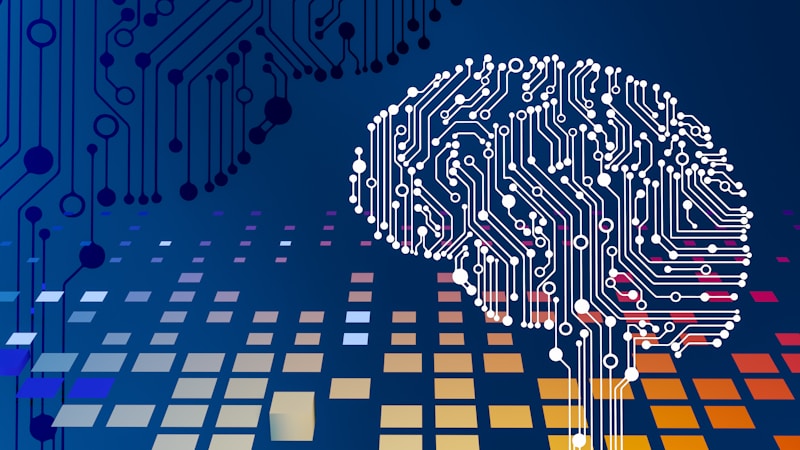
The name comes from the human brain. Our brains have billions of neurons — tiny cells that send signals to each other. When you learn something, the connections between certain neurons get stronger. That is how memory and learning work.
Engineers looked at how the brain works and tried to copy it using computers.
A computer neural network is made of layers of artificial neurons — mathematical calculations that pass information to each other. There are usually three types of layers:
Input Layer — This is where the data goes in. For a language AI like ChatGPT, the input is your question — broken into small pieces called tokens.
Hidden Layers — This is where the magic happens. There can be hundreds of hidden layers. Each layer looks at the data from the previous layer and finds patterns. The deeper you go into the layers, the more complex the patterns become. Early layers might recognize simple things like individual words. Deeper layers understand sentences, context, and meaning.
Output Layer — This is where the answer comes out. For a language model, this is the next word it predicts — and then the next, and the next, until you get a complete response.
How Does AI Learn?
Here is the really interesting part. AI learns by making mistakes — billions of them.
During training, the AI reads enormous amounts of text — books, websites, articles, code, conversations. For each piece of text, it tries to predict what word comes next. When it gets it wrong, it adjusts its internal settings slightly. When it gets it right, it reinforces those settings.
This process — called backpropagation — happens billions of times. After enough repetition, the neural network gets very good at understanding and generating language.
The AI does not actually understand language the way you do. It recognizes patterns at an extraordinary scale. It knows that certain words follow other words in certain contexts. It knows that if you ask about the capital of France, the pattern of words that follows is "Paris." It knows this not because it has been to Paris but because it has seen that pattern millions of times.
Why Does AI Sometimes Make Things Up?
This is called hallucination. And it happens because of how neural networks work.
The AI is always predicting the most likely next word based on patterns. Sometimes the most likely-sounding word is not actually true. The AI has no internal fact-checker. It just keeps generating words that sound right together — even if the underlying information is completely wrong.
This is exactly why the hybrid model matters. Humans need to verify what AI produces. AI generates fast — humans verify carefully.
The Hybrid Model — How to Actually Apply It
Now that you understand what AI can do and how it works, here is the practical hybrid model strategy you can apply starting today.
Step 1 — Let AI Handle the Heavy Lifting
Stop doing things manually that AI can do better and faster.
Writing tasks: Use AI to write first drafts of emails, reports, proposals, and documents. Your job is to edit, improve, and add your personal insights — not start from a blank page every time.
Research tasks: Use AI to summarise long documents, find patterns in data, and give you background on any topic. Then you add the judgment and decision-making.
Repetitive tasks: Use AI for anything repetitive — sorting information, categorising data, generating variations. You focus on the creative and strategic work.
Step 2 — Add What AI Cannot Do
Every piece of AI output needs the human layer on top of it.
- Add your personal experience and stories
- Apply your judgment about what is actually true vs what sounds true
- Add emotional intelligence — adjust the tone for the specific person you are communicating with
- Make the final call on important decisions
- Take responsibility for the outcome
Step 3 — Become the AI Manager
The most valuable role emerging in 2026 is not coding AI. It is managing AI.
In every industry, companies need people who can:
- Give AI the right instructions (prompt engineering)
- Review AI outputs for errors and bias
- Decide when to trust AI and when to override it
- Explain AI decisions to non-technical stakeholders
- Combine multiple AI tools into efficient workflows
You do not need to be a programmer. You need to be someone who understands both the business problem and how AI can help solve it.
Which Jobs Are Most at Risk Right Now?
Let us be honest about which roles AI is already replacing:
| Job | Risk Level | Why |
|---|---|---|
| Data entry clerk | 🔴 Very High | AI does this perfectly |
| Basic customer service | 🔴 Very High | Chatbots handle most queries |
| Junior copywriter | 🟠 High | AI writes decent first drafts |
| Basic financial analyst | 🟠 High | AI processes numbers faster |
| Translation services | 🟠 High | AI translates well now |
| Junior programmer | 🟠 High | AI writes code quickly |
| Graphic designer (basic) | 🟡 Medium | AI generates images but needs direction |
| Teacher/Professor | 🟡 Medium | AI supplements but human is still needed |
| Doctor/Nurse | 🟢 Low | Trust, physical care, judgment |
| Lawyer | 🟢 Low | Accountability and judgment |
| Plumber/Electrician | 🟢 Very Low | Physical work, AI cannot do this |
| AI Manager/Trainer | ✅ Growing | The hottest new role |
Which Jobs Are Being Created by AI?
Every major technology shift destroys some jobs and creates new ones. Here are the new roles AI is creating right now:
Prompt Engineer — The person who knows how to give AI the right instructions to get the best results. Already paying $100,000 to $300,000 per year in the USA.
AI Trainer — Teaching AI systems by reviewing their outputs and flagging errors. Growing rapidly in every industry.
AI Ethics Officer — Ensuring AI systems are fair, unbiased, and safe. Every major company needs one.
AI Product Manager — Deciding what AI products to build and how they should work. Combines business strategy with AI knowledge.
Human-AI Interaction Designer — Designing the experience of working with AI tools. Making them easier and safer to use.
AI Auditor — Checking AI systems for errors, biases, and security vulnerabilities before they affect real people.
Real Example — The Hybrid Model in Practice
Let us say you are a marketing professional. Here is how your work changes in the hybrid model:
Old way (no AI): Write a blog post → 4 hours Research competitors → 2 hours Create 10 social media posts → 3 hours Analyse campaign data → 2 hours Total → 11 hours
New way (hybrid model): Give AI your topic and key points → AI writes first draft → You edit and add personality → 45 minutes Ask AI to research competitors → You review and add strategic insight → 20 minutes Ask AI for 10 social post variations → You pick and personalise the best 3 → 15 minutes Ask AI to analyse campaign data → You interpret results and decide next steps → 30 minutes Total → Under 2 hours
Same output. Same quality (actually better because you had more time to think). Less than 20% of the time.
The person who learns this hybrid approach does not get replaced. They do the work of five people in the time it previously took to do the work of one. That person becomes the most valuable person on the team.
The Three Types of People in the AI Era
Right now, workers are dividing into three groups:
Group 1 — The Ignorers These people pretend AI is not happening or refuse to learn it. They are doing their jobs exactly as they did five years ago. These are the people most at risk of being replaced — not because AI is smarter than them, but because a person using AI is more productive than them, and companies will always choose productivity.
Group 2 — The Over-Trusters These people use AI for everything but do not verify the output. They submit AI-written reports without checking them. They follow AI advice without thinking critically. These people will make serious mistakes that hurt their careers and possibly their companies.
Group 3 — The Hybrid Workers These people use AI aggressively to accelerate their work, but they apply their human judgment to every AI output. They verify. They edit. They add what AI cannot provide. They are becoming the most valuable people in every industry.
The goal is to be in Group 3.
Simple Action Plan — Start This Week
Day 1 → Sign up for Claude AI or ChatGPT (free)
         Start using it for one task you do daily

Day 2 → Learn prompt engineering basics
         The better your instructions → better AI output

Day 3 → Use AI for your most time-consuming task
         Review the output carefully
         Notice where AI is wrong or missing context

Day 4 → Add your human layer on top
         Personal experience + judgment + verification

Day 5 → Calculate time saved
         Use that extra time for higher value work

Week 2 → Repeat with a different task
Week 3 → You are now a hybrid worker ✅
Final Thoughts
The question is not whether AI will change your job. It will. It already is.
The question is which side of that change you will be on.
Oracle is firing 30,000 people while investing billions in AI. That sounds terrifying. But here is what Oracle is also doing — hiring AI managers, AI trainers, AI product specialists, and human-AI collaboration experts at record salaries.
The companies are not getting rid of humans. They are getting rid of humans who cannot work with AI and replacing them with fewer humans who can work WITH AI and do ten times the output.
A neural network learns by adjusting itself after every mistake. That is exactly what you need to do right now. Adjust. Learn. Adapt.
The hybrid model is not the future. It is already the present.
The only question is whether you are in it.