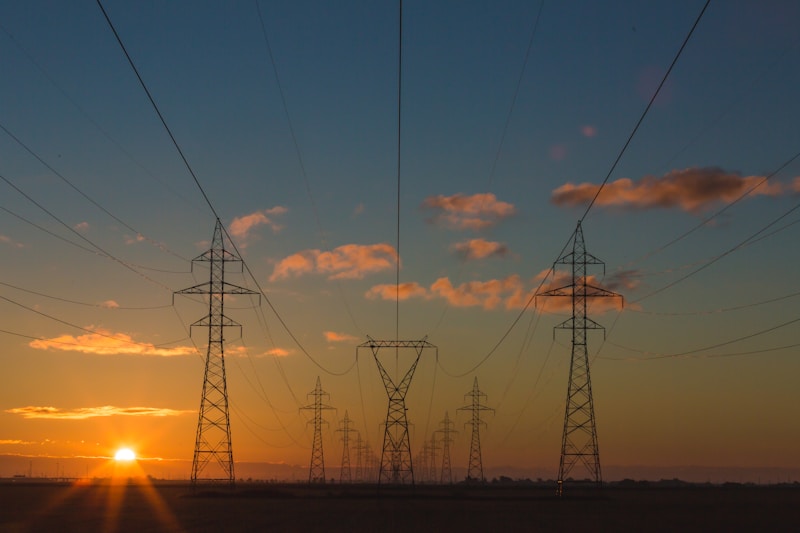
Every time you open ChatGPT and type a question — something is happening in a building thousands of kilometers away that most people never think about.
Electricity is being consumed. A lot of it.
And when you compare it to what happens when you do a simple Google search — the difference is genuinely shocking.
The Basic Numbers First
Let us just look at the raw comparison.
Each ChatGPT query consumes an estimated 2.9 watt-hours of electricity — nearly ten times more than a standard Google search.
One Google search — 0.3 watt-hours.
One ChatGPT query — 2.9 watt-hours.
Ten times more. For one single question.
Now you might be thinking — okay but what does 2.9 watt-hours actually mean in real life? Here is the simple version.
A single ChatGPT query uses roughly the same amount of energy as charging a smartphone for 2 to 3 minutes.
That does not sound like much for one query. The problem is the scale.
What Happens At Scale
ChatGPT now has around 900 million weekly users. Hundreds of millions of queries happen every single day.
ChatGPT uses 621.4 megawatt-hours of electricity every single day to handle over 200 million user queries. That is more than 21 thousand times the daily energy of an average US household.
Let that sink in for a second.
Twenty one thousand times the daily energy of one household. Every single day.
And yearly? ChatGPT consumes 226.8 gigawatt-hours each year to process 78 billion prompts — enough to fully charge about 3.13 million electric vehicles.
That is nearly every electric car currently on American roads. Charged. Every year. Just from ChatGPT queries.
Why Does AI Use So Much More Than Google?
This is the interesting part.
Google search and ChatGPT look similar from the outside. You type something. You get an answer. But what happens inside is completely different.
When you Google something — the search engine is basically finding a book that already exists on a shelf. The content is already indexed, already stored, already ranked. Google just retrieves it and shows it to you. Very fast. Very efficient.
When you ask ChatGPT something — it does not retrieve anything. It generates a completely new response from scratch. Every single time. Word by word. Calculating the probability of every next word based on billions of parameters. That process requires a huge amount of GPU computation — which requires a huge amount of electricity.
The fundamental difference lies in their computational approaches. Google's lower carbon footprint stems from significant investments in renewable energy, highly optimised data centres, and the use of custom silicon designed specifically for its workloads.
In simple words — Google has spent 25 years optimising for efficiency. AI models like ChatGPT are generating something new every time, which is inherently much more computationally expensive.
The Water Problem Nobody Talks About
Electricity is not the only resource AI consumes.
Using ChatGPT to generate a 100-word email sweats off more than an Evian bottle's worth of water — 519 millilitres — according to research by The Washington Post and the University of California.
Water is used to cool the servers inside data centers. Without cooling, the chips would overheat and shut down. So every AI query also uses water indirectly.
The daily water consumption of ChatGPT is estimated at 148.28 million litres — 39.16 million gallons — every single day.
148 million litres. Every day. Just for cooling.
Is GPT-5 Even Worse?
Yes. Significantly.
The newer and more powerful the AI model — the more electricity it needs.
According to researchers at the University of Rhode Island's AI lab, ChatGPT-5 consumes anywhere between 2 and 45 watts per medium-length prompt, averaging around 18.9 watt-hours. This is over fifty times more than the energy needed for a typical Google search.
Fifty times. Not ten times. Fifty.
The more capable the AI — the more electricity it burns per query. There is a direct relationship between intelligence and energy cost. And as models keep getting more powerful — this number keeps going up.
What Does This Mean For The Planet?
The carbon emissions angle is the one that scientists are most concerned about.
Google search uses 0.0003 kWh per query, emitting 0.2 grams of CO2. ChatGPT uses 0.0029 kWh per query — ten times more energy — emitting 68 grams of CO2.
68 grams of CO2 for one ChatGPT query versus 0.2 grams for one Google search.
That is 340 times more carbon emissions per query.
Now multiply that by hundreds of millions of queries per day.
If AI's energy consumption is left unchecked, it could double France's current energy usage by 2030.
Double France's energy usage. By 2030. That is four years away.
This is why every major tech company — Microsoft, Google, Amazon, Meta, Oracle — is frantically building new data centers and signing nuclear power deals. They are not spending hundreds of billions just because they want to. They have to. Because the energy demand from AI is growing faster than existing infrastructure can handle.
But Here Is The Other Side Of The Argument
Before this sounds too scary — there is an important counterpoint.
Each year, the 117 lowest-consumption countries each consume less electricity than ChatGPT.
That is a striking fact. But here is what it does not tell you.
ChatGPT is used by close to a billion people. The work those people do with ChatGPT — the emails written, the code debugged, the documents drafted, the questions answered — replaces physical activity that would have consumed far more energy in other ways.
Annual worldwide electricity consumption: 30,000 terawatt-hours. Annual energy consumption for ChatGPT usage: 228 gigawatt-hours — that is 0.0008% of total global electricity.
So ChatGPT — for all the headlines about its energy use — consumes less than one tenth of one percent of global electricity. Annual worldwide beef production uses 5% of global electricity. That is 6,250 times more than ChatGPT.
The concern is not where we are today. The concern is where we are heading. AI usage is growing exponentially. If it keeps doubling and tripling every year — the numbers in five years will look completely different.
The Sam Altman Quote That Puts It All Together
Remember when Sam Altman said saying "please" and "thank you" to ChatGPT costs OpenAI tens of millions of dollars?
Now you understand exactly why.
Every extra word in your query is extra tokens. Extra tokens is extra GPU computation. Extra computation is extra electricity. Extra electricity — at the scale of hundreds of millions of users — is tens of millions of dollars.
It is not magic. It is physics and economics. Every word costs electricity. Every electricity unit costs money. At a billion users — small things become enormous things.
What Should You Actually Do With This Information?
Nothing dramatic. You do not need to stop using AI.
But maybe think about which tool you actually need for each task.
Quick factual question with one clear answer — Google search is faster, more efficient, and uses ten times less electricity.
Complex question that needs reasoning, writing, analysis, or creativity — ChatGPT or Claude is the right tool. The extra electricity cost is justified by the output.
Using the right tool for the right job is not just about efficiency for you — it is actually the more environmentally responsible approach too.
The Bigger Picture
We are at an interesting moment in history.
AI is genuinely transforming what is possible. The things ChatGPT, Claude, Gemini, and other AI tools can do in 2026 would have seemed impossible five years ago.
But that capability comes with a real physical cost. Electricity. Water. Hardware. Carbon. Infrastructure.
The good news is that efficiency is improving fast. Typical ChatGPT queries using GPT-4o likely consume roughly 0.3 watt-hours — ten times less than older estimates — because of more efficient models and hardware.
In other words — AI is getting more capable AND more efficient at the same time. The gap between AI and Google search in energy terms is narrowing. And as renewable energy powers more data centers, the carbon story improves too.
The challenge is whether efficiency can keep pace with the explosive growth in usage.
That race — between AI capability growing and AI efficiency improving — is one of the most important stories of the next decade.
We Build Efficient AI-Powered Websites For Your Business
At TheTechGenAI Studios we think about this stuff so you don't have to.
We build AI-powered websites and digital solutions for businesses across India and globally — websites that are fast, efficient, mobile-friendly, and actually work hard for your business every day.
We add AI chatbots, WhatsApp integration, booking systems, and smart features — without overcomplicating things or wasting resources.
Whether you need a simple 5-page business website or a full e-commerce store with AI built in — we deliver it fast, affordable, and properly.
Starting at just Rs.5,000 for a website. $60 USD for international clients.
📩 WhatsApp: +91 98704 05692 🌐 thetechgenai.com/contact 📧 [email protected]
Free consultation. No commitment. Just honest work at honest prices.
#how much electricity does chatgpt use#chatgpt vs google energy#ai electricity consumption#chatgpt energy per query#google search electricity#ai environmental impact 2026#chatgpt power consumption