Delivery Robot Cost in 2026: Prices, Companies, Countries and Sales
Delivery robots are becoming increasingly common in restaurants, hotels, hospitals, factories, warehouses and other commercial environments.
Instead of having employees repeatedly carry food, packages, supplies or other materials from one location to another, autonomous delivery robots can navigate buildings and transport items with limited human assistance.
But how much does a delivery robot cost?
The answer depends heavily on the type of robot. A small restaurant delivery robot can cost around $10,000–$20,000, while larger industrial delivery robots can cost considerably more.
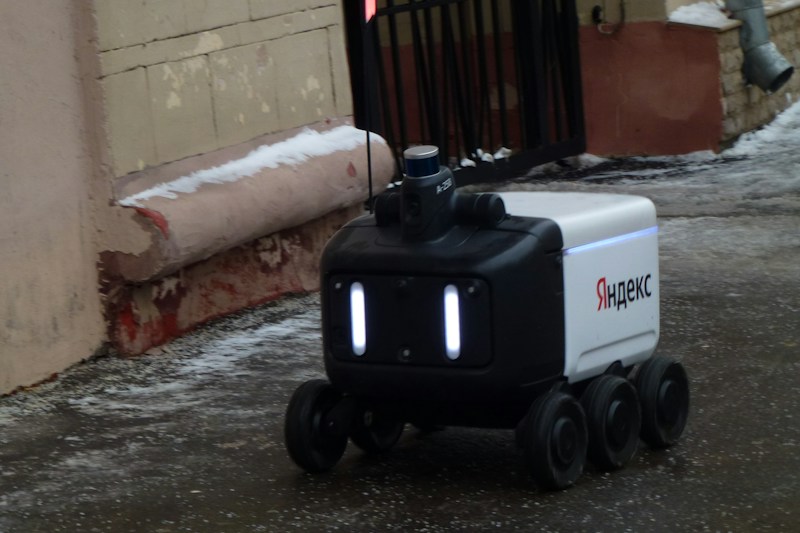
Several companies now sell commercial delivery robots, including PUDU Robotics, KEENON Robotics, Bear Robotics and other specialized robotics companies. Outdoor sidewalk delivery is another category, with companies such as Starship Technologies operating fleets of autonomous robots.
In this guide, we look at delivery robot cost, the companies selling them, the countries where they operate, popular models and the number of robots companies have reported shipping or deploying.
What Is a Delivery Robot?
A delivery robot is an autonomous or semi-autonomous robot designed to transport goods from one location to another.
Depending on the model, the robot may deliver:
- Food
- Drinks
- Hotel room-service orders
- Medicine and medical supplies
- Packages
- Factory materials
- Warehouse inventory
- Retail products
- Other commercial goods
Most modern delivery robots use technologies such as LiDAR, cameras, depth sensors, SLAM navigation, obstacle detection and autonomous route planning.
Some indoor delivery robots can also communicate with elevators and automatic doors, allowing them to travel between floors in hotels or other buildings.
Delivery Robot Cost
There is no single delivery robot price.
The cost depends on the robot's size, payload capacity, navigation technology, software, charging system, elevator integration and intended environment.
As a broad guide, commercial indoor delivery robots can often fall into the following ranges:
| Type of delivery robot | Approximate cost |
|---|---|
| Small service/delivery robot | $10,000–$15,000 |
| Restaurant delivery robot | $14,000–$20,000 |
| Hotel delivery robot | $15,000–$25,000+ |
| Heavy-load indoor delivery robot | $20,000+ |
| Outdoor sidewalk delivery robot | Usually fleet/partnership pricing |
| Industrial autonomous delivery robot | Can reach tens of thousands of dollars |
These figures are indicative rather than universal retail prices. Commercial robotics companies frequently sell through distributors or provide quotations based on deployment requirements.
For example, current US listings show PUDU BellaBot at around $14,500, BellaBot Pro around $16,000 and PUDU KettyBot around $14,000.
Another commercial robotics distributor currently lists BellaBot at $16,000 and PUDU's larger T300 and T600 industrial platforms at around $21,000 and $24,000 respectively.
Delivery Robot Cost in India
The price in India can be substantially different from the advertised international price.
Import duties, GST, shipping, installation, software, maintenance, local support and distributor margins can all affect the final cost.
Therefore, a robot advertised at $15,000 internationally should not automatically be converted directly into Indian rupees and presented as the final Indian price.
For businesses in India, the most accurate approach is to request a quotation from the manufacturer or authorized distributor.
A restaurant, hotel or hospital should also calculate the total deployment cost rather than looking only at the purchase price.
Which Companies Sell Delivery Robots?
Several companies are active in commercial delivery robotics.
1. PUDU Robotics
PUDU Robotics is one of the largest commercial service robotics companies in the world.
Its portfolio includes delivery robots for restaurants, hotels, healthcare facilities, retail environments and buildings.
Popular PUDU models include:
- BellaBot
- BellaBot Pro
- PUDU Bot 2
- KettyBot
- FlashBot
- FlashBot Max
- PUDU T300
- PUDU T600
PUDU says its robots are deployed across more than 80 countries and regions.
The company reported cumulative shipments exceeding 130,000 robots in 2026. Importantly, that figure covers PUDU's overall robot portfolio, not only delivery robots.
PUDU BellaBot
BellaBot is designed primarily for restaurant and service environments.
It uses LiDAR and visual SLAM navigation, along with 3D sensing for obstacle avoidance.
PUDU says BellaBot can carry food on four trays and can support up to 20 BellaBots working together in the same environment. The company also advertises more than 400 dish deliveries in a day under suitable operating conditions.
Current third-party listings put BellaBot around $14,500–$16,000 depending on supplier and configuration.
PUDU FlashBot
FlashBot is designed for building and hotel delivery.
It can be used to transport items such as room-service orders and amenities through buildings.
PUDU reported in 2026 that FlashBot deployments with Atour Group had surpassed 1,000 units in less than six months, while global monthly sales of the FlashBot series continued to exceed 500 units.
2. KEENON Robotics
KEENON Robotics is another major commercial service robotics company.
Its portfolio includes restaurant delivery robots, hotel delivery robots, hospital robots and industrial delivery systems.
Important models include:
- DINERBOT T9
- DINERBOT T10
- BUTLERBOT W3
- S100
- S300
- Other specialized service robots
KEENON says its products are deployed in more than 70 countries and regions and more than 600 cities worldwide.
The company also reports cumulative shipments exceeding 100,000 robots across its portfolio. Again, this is the company's total robot shipments and should not be interpreted as 100,000 delivery robots alone.
KEENON DINERBOT T10
The DINERBOT T10 is designed for restaurant delivery and customer interaction.
It includes a large interactive display, adaptive head movement and AI-based tray detection.
For navigation, KEENON lists 4 stereo vision sensors, VSLAM and an RGB camera for 360-degree recognition.
KEENON BUTLERBOT W3
The W3 is designed primarily for hotel and hospitality delivery.
It uses enclosed compartments so that hotel staff can place items inside the robot before it travels to a guest.
KEENON lists hotel deployments including the Sheraton Grande Tokyo Bay Hotel and other hospitality locations.
KEENON S300
The S300 is designed for much heavier deliveries than restaurant robots.
It has a maximum payload of 300 kg.
KEENON lists LiDAR SLAM, stereo vision, VSLAM, automatic charging and up to six hours of full-load operation.
3. Bear Robotics
Bear Robotics is another company known for commercial service robots.
Its Servi robot has been designed for restaurant and hospitality environments.
Current commercial listings show Servi at approximately $9,990 in the US, although commercial deployments may use leasing or service agreements rather than a simple one-time purchase.
Bear Robotics is particularly relevant to restaurants because its robots are designed to help staff transport food and other items around dining areas.
4. Starship Technologies
Starship Technologies operates in a different part of the delivery robot market.
Instead of primarily operating inside restaurants or hotels, Starship focuses on autonomous sidewalk delivery.
Its small six-wheeled robots can transport food, groceries and other relatively lightweight items over short distances.
According to a 2026 disclosure cited by the DEPLOY registry, Starship had surpassed 10 million autonomous deliveries with more than 3,000 robots across more than 300 service areas in eight countries.
The countries reported were:
- United Kingdom
- Germany
- Switzerland
- Sweden
- Finland
- Estonia
- Czech Republic
- United States
The same source lists an estimated robot cost of approximately $3,000–$7,000, but this is an analyst estimate rather than an official Starship retail price.
Starship's business model is therefore different from buying a BellaBot for a restaurant. Its robots are generally deployed as part of autonomous delivery services and partnerships.
Countries Where Delivery Robots Are Being Used
Delivery robots are no longer limited to one country.
Commercial and autonomous delivery robots are being deployed across North America, Europe, Asia and other markets.
United States
The United States has a large commercial service robot market.
Restaurant delivery robots such as BellaBot and Servi are deployed in hospitality environments.
Outdoor sidewalk delivery has also expanded through companies such as Starship.
United Kingdom
The UK has become an important market for autonomous sidewalk delivery.
Starship operates delivery robots in the UK, and in 2026 Deliveroo announced a rollout of Coco robots in locations including London Canary Wharf, Milton Keynes, Leeds, Stockton-on-Tees and Nottingham.
Germany
Germany is among the European countries where autonomous delivery robots have been deployed.
Starship lists Germany among its active countries.
Finland
Finland has been an important market for sidewalk delivery robots, particularly around university and urban environments.
Starship lists Finland among its operating countries.
Estonia
Estonia is another major Starship market.
The company has operated autonomous delivery robots in multiple European markets, with Estonia among the countries in its 2026 footprint.
Japan
Japan is an important market for commercial service robots because of its hospitality and restaurant automation needs.
KEENON lists deployments in Japan, including a W3 hotel delivery robot at Sheraton Grande Tokyo Bay.
South Korea
KEENON also has deployments in South Korea.
Its customer examples include a T8 delivery robot operating in a café in Seoul.
India
India is an emerging market for commercial delivery and service robots.
Restaurants, hotels, hospitals, warehouses and other businesses are increasingly evaluating autonomous robots.
However, the Indian market is still smaller than mature deployment markets such as China, the United States and parts of Europe.
How Many Delivery Robots Have Been Sold?
This is one of the most difficult questions because robotics companies do not all report sales using the same metric.
Some report:
- Total robots shipped
- Robots deployed
- Robots manufactured
- Monthly sales
- Completed deliveries
- Robots across every product category
Therefore, these figures should not be added together.
PUDU Robotics
PUDU reported more than 130,000 robots shipped globally by 2026.
This is cumulative company-wide shipments and includes delivery, cleaning, industrial and other robots.
PUDU had previously announced that it had passed the 100,000-robot shipment milestone in June 2025.
KEENON Robotics
KEENON reports more than 100,000 cumulative robot shipments.
Its robots are deployed across more than 70 countries and regions and more than 600 cities.
Again, this is the company's overall fleet rather than a delivery-robot-only figure.
Starship Technologies
Starship has reported more than 10 million autonomous deliveries and more than 3,000 robots operating across more than 300 service areas in eight countries, according to its 2026 disclosure cited by the DEPLOY registry.
This is particularly useful because it gives an indication of actual real-world usage rather than simply manufacturing volume.
Delivery Robot Companies and Their Scale
| Company | Important robots | Main market | Reported scale |
|---|---|---|---|
| PUDU Robotics | BellaBot, PUDU Bot 2, FlashBot | Restaurants, hotels, healthcare, buildings | 130,000+ total robots shipped |
| KEENON Robotics | T9, T10, W3, S100, S300 | Restaurants, hotels, hospitals, industry | 100,000+ total shipments |
| Starship Technologies | Starship delivery robot | Sidewalk/last-mile delivery | 3,000+ robots; 10M+ deliveries |
| Bear Robotics | Servi | Restaurants/hospitality | Commercial deployments; exact global unit total not established here |
The numbers represent different metrics, so they should not be treated as directly comparable sales figures.
Delivery Robot Price Comparison
| Robot | Company | Main use | Approximate price |
|---|---|---|---|
| BellaBot | PUDU | Restaurant delivery | $14,500–$16,000 |
| BellaBot Pro | PUDU | Restaurant/service | Around $16,000 |
| KettyBot | PUDU | Restaurant/service | Around $14,000 |
| PUDU Bot 2 | PUDU | General indoor delivery | Around €9,800 before VAT in one European listing |
| FlashBot Max | PUDU | Hotel/building delivery | Around $20,000 in one commercial listing |
| Servi | Bear Robotics | Restaurant service | Around $9,990 in one US listing |
| DINERBOT T9 | KEENON | Restaurant delivery | Around $16,400 in one commercial listing |
| DINERBOT T10 | KEENON | Restaurant delivery/marketing | Around $19,600 in one commercial listing |
| BUTLERBOT W3 | KEENON | Hotel delivery | Around $19,600 in one commercial listing |
| S300 | KEENON | Heavy-load delivery | Quote required |
Prices are examples from current commercial listings and can change depending on country, configuration, taxes, shipping, software and support.
How Do Delivery Robots Work?
Modern delivery robots combine several technologies.
Step 1: Mapping
The robot first creates or receives a map of its operating environment.
Indoor robots can use LiDAR, cameras and SLAM technologies to understand their surroundings.
Step 2: Location
The robot continuously determines where it is on the map.
This allows it to calculate a route to the delivery destination.
Step 3: Obstacle Detection
Cameras, LiDAR and depth sensors detect people, furniture, walls and other obstacles.
The robot can slow down, stop or choose another route.
Step 4: Autonomous Navigation
The robot calculates a path and moves toward the destination.
Some systems can dynamically change their route when the environment changes.
Step 5: Delivery
The robot reaches the destination and waits for the customer or employee to retrieve the goods.
Some hotel robots can interact with elevators and doors, allowing them to travel between floors.
Step 6: Return and Recharge
After completing the task, the robot can return to a starting point or charging station.
Some systems support automatic charging or battery swapping.
Delivery Robots vs Human Workers
Delivery robots are not necessarily designed to completely replace human workers.
In many commercial environments, they function as an additional pair of hands.
For example, restaurant employees can prepare food and place it on a robot while the robot transports the food across the dining area.
This allows employees to spend more time interacting with customers or performing tasks that require human judgment.
KEENON describes its robots as supporting employees during peak periods, while PUDU similarly positions its robots as tools for improving operational efficiency.
Are Delivery Robots Worth the Cost?
For a small business, spending $10,000–$20,000 or more on a robot can seem expensive.
However, the economics can make sense for businesses with repetitive transportation tasks.
A restaurant operating for many hours every day may use a robot hundreds of times.
Hotels can use delivery robots to transport amenities and room-service orders.
Hospitals can use autonomous robots for internal transportation.
Factories can use larger autonomous robots to move materials.
The key question is therefore not simply:
"How much does the robot cost?"
It is:
"How much labor and operating time can the robot save over several years?"
What Should Businesses Check Before Buying?
Before purchasing a delivery robot, businesses should consider:
Payload
How much weight does the robot need to carry?
A restaurant may need only several trays, while a factory may require hundreds of kilograms of capacity.
Navigation
Check whether the robot uses LiDAR, visual SLAM, VSLAM or another navigation system.
Environment
A restaurant, hotel and warehouse have very different requirements.
Elevators and Doors
Hotels may require elevator integration and automatic door compatibility.
Battery
Check operating time, charging time and whether the battery can be swapped.
Maintenance
Commercial robots require maintenance, software updates and technical support.
Software
Fleet-management software becomes important when multiple robots are operating simultaneously.
Local Support
For businesses in India and other international markets, local installation and service support can be as important as the robot itself.
The Future of Delivery Robots
Delivery robots are moving beyond simple food transportation.
Future systems are expected to become more capable at understanding their environments and coordinating with other robots.
AI can allow robots to identify objects, understand changing environments and optimize routes.
PUDU's 2026 developments show this direction clearly, with its delivery robots being positioned as intelligent mobile platforms rather than simple autonomous carts.
KEENON is similarly developing a broader ecosystem of specialized service robots, including delivery, cleaning and humanoid platforms.
Outdoor delivery is also expanding. Starship's millions of completed autonomous deliveries demonstrate that sidewalk robots can operate at significant scale in suitable environments.
Commercial delivery robots can cost roughly $10,000–$25,000 or more depending on the model and application. Some smaller or specialized systems may cost less, while heavy industrial robots can cost considerably more.
How much does a restaurant delivery robot cost?
Popular restaurant robots such as PUDU BellaBot are currently listed around $14,500–$16,000 by some US commercial sellers.
How much does a hotel delivery robot cost?
Hotel delivery robots can cost around $15,000–$25,000 or more depending on the model, compartments, elevator integration and software.
Which company sells the most delivery robots?
There is no single verified global ranking for delivery-robot-only sales. PUDU and KEENON are among the largest commercial service robotics companies, but their published shipment totals include multiple categories of robots.
How many robots has PUDU sold?
PUDU reported more than 130,000 robots shipped globally by 2026. This includes multiple robot categories, not just delivery robots.
KEENON reports more than 100,000 cumulative robot shipments across its portfolio. Its products are deployed in more than 70 countries and regions and more than 600 cities.
How many deliveries has Starship completed?
Starship has surpassed 10 million autonomous deliveries, according to a 2026 disclosure cited by the DEPLOY registry.
Which countries use delivery robots?
Delivery robots are being used in countries including the United States, United Kingdom, Germany, Finland, Estonia, Japan, South Korea and many other markets.
Can I buy a delivery robot in India?
Commercial delivery robots can be sourced in India through robotics suppliers and international manufacturers. The final price depends on the model, import costs, configuration, installation and support.
Can delivery robots replace human workers?
Delivery robots can automate repetitive transportation tasks, but many deployments are designed to assist workers rather than completely replace them.
Final Takeaway
Delivery robots have moved from experimental demonstrations to real commercial deployments.
Companies such as PUDU Robotics, KEENON Robotics, Bear Robotics and Starship Technologies are already operating or selling robots for restaurants, hotels, hospitals, factories and last-mile delivery.
The cost varies widely. Indoor restaurant robots can cost roughly $10,000–$20,000, while larger industrial systems can cost substantially more.
PUDU reports more than 130,000 total robots shipped, while KEENON reports more than 100,000 cumulative shipments across their respective product portfolios. Starship has completed more than 10 million autonomous deliveries using a fleet of more than 3,000 robots across eight countries.
The most important thing for a business is not simply the purchase price. Businesses should compare the robot's payload, navigation, battery life, maintenance, software, deployment requirements and expected labor savings.
As AI, navigation and fleet-management technology improve, delivery robots are likely to become increasingly common in restaurants, hotels, healthcare facilities, warehouses and urban delivery networks.


