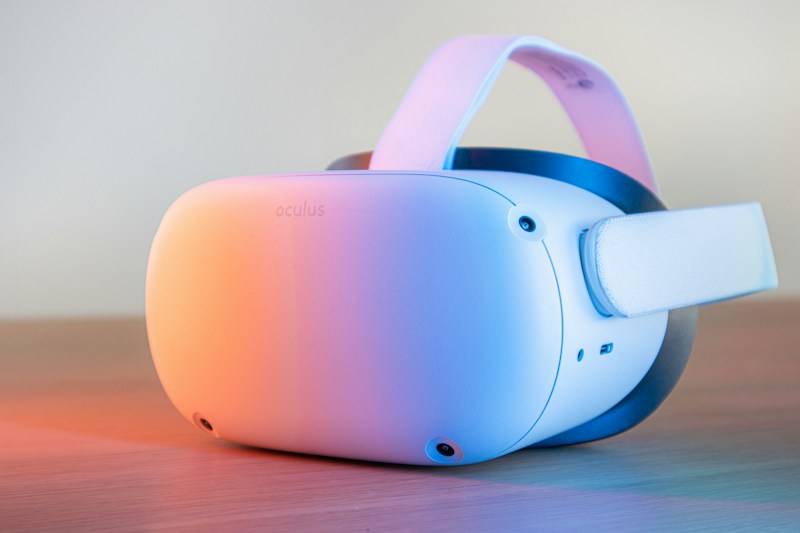
Did the metaverse disappear?
The short answer is yes. Meta — the company that once bet its entire future on the metaverse — is now officially pulling the plug on its most prominent virtual reality project. Horizon Worlds is shutting down.
In one of the biggest and most expensive tech failures in history, Meta spent over $80 billion building the metaverse. They hired thousands of engineers. They changed the company's name from Facebook to Meta. Their CEO appeared in keynotes wearing a VR headset, promising that virtual reality would be the next great computing platform.
And then almost nobody used it.
Here is the complete story — what happened, why it failed, what the numbers really look like, what Meta is doing now, and what the entire tech industry learned from the most expensive mistake in Silicon Valley history.
What Just Happened — The Shutdown Timeline
Meta announced on March 18, 2026 that Horizon Worlds — its virtual reality social platform — will be completely shut down on Quest VR headsets.
Here is exactly what happens and when:
| Date | What Happens |
|---|---|
| March 31, 2026 | Horizon Worlds removed from Quest Store |
| March 31, 2026 | Key virtual worlds shut down — Horizon Central, Events Arena, Kaiju, Bobber Bay all gone |
| March 31, 2026 | Meta Horizon Plus perks removed from all subscriptions |
| June 15, 2026 | Complete and final shutdown of Horizon Worlds on all VR headsets |
After June 15, Horizon Worlds will only survive as a basic mobile app — a shadow of the immersive virtual world Zuckerberg once promised would change human civilisation forever.
What Was the Metaverse Supposed to Be?
When Meta changed its name from Facebook in October 2021, CEO Mark Zuckerberg gave one of the most ambitious technology presentations in recent memory.
He called the metaverse "the next frontier of computing." He predicted it would reach one billion users within a decade. He said it would generate hundreds of billions of dollars in digital commerce. He compared it to the invention of the smartphone — a technology so fundamental that everything about how humans live and work would change around it.
The idea was bold and simple. Instead of looking at a flat screen, you would step inside it. Put on a VR headset and you would be in a virtual office with your colleagues from around the world. At a virtual concert. At a virtual family dinner. The physical limitations of geography would dissolve.
Zuckerberg himself appeared in demonstrations as a cartoonish avatar — with no legs, which became an internet meme. But beyond the awkward presentations, the vision was serious. Meta was betting the company on this.
The reality turned out to be very different.
The Numbers — How Bad Was It Really?
The failure of the metaverse is most clearly told through numbers. These are not opinions — they are documented financial results.
Money Lost
| Year | Reality Labs Loss |
|---|---|
| 2021 | $10.2 billion |
| 2022 | $13.7 billion |
| 2023 | $16.1 billion |
| 2024 | $17.7 billion |
| 2025 | $17.7 billion |
| Total | $80+ billion |
Reality Labs — Meta's division responsible for VR hardware and the metaverse — lost money every single quarter without exception. In Q4 2025 alone, the loss was $6.02 billion. In just three months.
To put $80 billion in context:
$80 billion = NASA's entire annual budget × 4
$80 billion = Entire GDP of several small countries
$80 billion = Building 20+ state of the art hospitals
Users — The Real Failure
The financial losses would be defensible if the product was growing. It was not.
At its peak, Horizon Worlds had approximately 300,000 monthly active users. That sounds like a lot until you compare it to anything else:
Roblox        → 80 million daily users
Fortnite      → 30 million daily users
Minecraft     → 170 million monthly users
Facebook      → 3 billion monthly users
Horizon Worlds→ 300,000 monthly users (peak)
Three hundred thousand users after spending $80 billion. That is approximately $267,000 spent per user.
Employee Impact
Meta's commitment to the metaverse had real human consequences. When the pivot away happened:
- In January 2026, Meta cut over 1,000 Reality Labs employees
- The entire staff of Ouro Interactive — an in-house studio Meta had built to create Horizon Worlds content — was let go
- Dozens of projects were cancelled overnight
- Teams that had worked for years on virtual world content watched their work become obsolete
Why Did the Metaverse Fail? Five Real Reasons
Reason 1 — Nobody Actually Wanted It
This is the most fundamental reason. The metaverse solved a problem that most people did not feel they had.
People were satisfied communicating through text, voice calls, and video calls. Zoom had just demonstrated during the pandemic that people could work together effectively without being in the same physical space — using existing technology, on existing devices, with no special hardware required.
The metaverse asked people to buy expensive headsets, strap them to their faces, and interact with cartoon avatars in virtual rooms. When given the choice, the overwhelming majority of people said no.
Reason 2 — The Technology Was Not Ready
Even if people had wanted the metaverse experience, the technology could not deliver it adequately in 2021-2024.
VR headsets were:
- Heavy — wearing them for extended periods caused neck strain and headaches
- Hot — the computing power required generated significant heat
- Nauseating — motion sickness affected a significant percentage of users
- Low resolution — virtual environments looked obviously fake and dated
- Isolating — wearing a headset meant being completely cut off from the physical world
The dream was a seamless virtual world. The reality was an expensive piece of plastic that made many people feel sick after 20 minutes.
Reason 3 — The Price Was Too High
Mass adoption of any technology requires affordable hardware. Smartphones became universal when they became cheap. The internet became universal when it became accessible.
Meta Quest headsets cost $300 to $500. For most families — particularly in developing markets that Meta needed for scale — this is simply too expensive for an optional entertainment device with limited appeal.
Compare this to a smartphone which costs ₹5,000-₹10,000 in India and provides obvious, immediate value. The value proposition of a VR headset was never clear enough to justify the price.
Reason 4 — The Losses Were Completely Unsustainable
Even if everything else had been going well — even if users were growing and engagement was increasing — the financial losses were on a scale that could not continue indefinitely.
Losing $17 billion per year in one division would strain any company. Meta's core business — Facebook and Instagram advertising — remained enormously profitable, which is the only reason the metaverse experiment lasted as long as it did.
But when AI emerged as a more promising opportunity, the choice became clear. Stop throwing money into a hole and redirect it to something that might actually work.
Reason 5 — The Timing Was Wrong
The metaverse concept is not necessarily wrong. Persistent virtual worlds where people meet, work, and socialise may genuinely be part of the future. But Zuckerberg tried to force that future to arrive in 2021 when the technology, the hardware, and the cultural readiness were simply not there yet.
This is a common pattern in technology — the right idea at the wrong time. VR has shown significant promise in specific applications like healthcare training, architectural visualisation, and military simulation. The problem was positioning it as a mass consumer social platform before any of those foundations were solid.
What Happened to Horizon Worlds Users?
This is perhaps the most human part of this story and the part that gets discussed least in the business coverage.
Despite the small overall numbers, Horizon Worlds had real communities inside it. Support groups for people with disabilities who found genuine connection in virtual spaces. Creative communities building virtual worlds. Social groups for people in remote locations who used VR to feel less isolated.
These communities had invested real time, real emotion, and real money in virtual spaces that will simply cease to exist on June 15, 2026. Their virtual creations, their meeting places, their communities — gone.
Meta's description of the shutdown as a "platform separation to let each version grow" does not acknowledge what this means for real people who genuinely used the product. For them, June 15 is simply an end date with no alternative.
What Is Meta Doing Instead?
Meta has not collapsed. Far from it. The company has pivoted dramatically and the new direction is showing real results.
Meta AI
Integrated across WhatsApp, Instagram, Messenger, and Facebook, Meta AI has become one of the most-used AI assistants in the world — largely because it is embedded inside apps that billions of people already use daily. You do not need to download anything new. You just start chatting with the AI inside the app you are already using.
Ray-Ban Smart Glasses
Meta's AI-powered Ray-Ban smart glasses have been one of the genuine success stories of 2025-2026. With 7 million units sold in 2025 alone and production scaling to 20 million units per year, the glasses represent something the metaverse never was — a product people actually want to buy.
The glasses look normal. They work with your real life. They do not require you to isolate yourself from the physical world.
Llama AI Models
Meta's open source Llama AI models are now considered among the best available for developers. By making powerful AI models freely available, Meta has built significant goodwill in the developer community and positioned itself as a serious AI research company.
AI Content Tools for Creators
Instagram and Facebook now have extensive AI tools for creators — generating images, writing captions, suggesting content ideas, editing videos. These features drive more content creation which drives more engagement which drives more advertising revenue.
The pivot from metaverse to AI is complete. And unlike the metaverse, these AI investments are generating real revenue.
Did the Metaverse Disappear Completely?
Not entirely. It is important to make a distinction here.
The concept of the metaverse — persistent virtual worlds where people meet and interact — still exists and is still growing in specific contexts.
What survived:
- Roblox — 80 million daily users, primarily younger audiences
- Fortnite — Concerts, events, and social spaces within gaming
- VRChat — Niche but dedicated community
- Gaming metaverses — Various gaming worlds with persistent economies
- Industrial VR — Architecture, healthcare, military training applications
What failed:
- The vision of VR replacing normal social interaction
- The idea of virtual offices as mainstream workplaces
- The concept of a single unified metaverse platform
- The belief that people would pay $300-500 for social VR hardware
The metaverse as a niche application within gaming and specific industries? Still alive. The metaverse as the future of human social interaction that Meta spent $80 billion building? Dead.
What the Tech Industry Learned
Meta's metaverse failure has become a case study that every technology company is now discussing. Here are the lessons that have actually changed how the industry operates:
Lesson 1 — Solve Real Problems
AI succeeded because it solves real, immediate, obvious problems. Writing an email faster. Coding more efficiently. Generating images. Answering questions. These are things people needed and immediately understood.
The metaverse tried to replace physical social interaction that most people were satisfied with. It never answered the question: "What specific problem does this solve better than existing solutions?"
Lesson 2 — Wait for the Hardware
Launching a platform before the hardware is ready is extremely dangerous. The metaverse needed lightweight, comfortable, affordable VR headsets. Those did not exist in 2021. Meta tried to build the software world before the hardware world was ready.
Contrast this with AI — it runs on hardware everyone already owns (smartphones and computers). No new device required.
Lesson 3 — Do Not Bet Everything at Once
Meta literally changed its company name to Meta. It reorganised its entire corporate identity around one product. When that product failed, the reputational damage extended to the entire company.
Diversification of risk — running the AI and metaverse bets in parallel rather than making metaverse the defining identity of the company — would have been significantly smarter.
Lesson 4 — Users Must Pull, Not Be Pushed
The best technology products succeed because users pull them into their lives — they discover them, love them, tell friends, and demand more. The metaverse was pushed — marketed intensely, presented as inevitable, but never genuinely demanded by users.
Timeline of Meta's Metaverse Journey
Oct 2021  → Facebook renames to Meta
             Zuckerberg bets company on metaverse

Dec 2021  → Horizon Worlds launches on Quest headsets
             Initial excitement quickly fades

2022      → $13.7 billion lost in Reality Labs
             Users numbers disappointing

2023      → $16.1 billion lost
             Memes about Horizon Worlds' empty
             virtual spaces go viral

2024      → $17.7 billion lost
             Internal reports show user retention
             is catastrophically low

Jan 2025  → Meta begins shifting focus to AI
             First major Reality Labs layoffs

Oct 2025  → Smart glasses hit 7 million sales
             AI products generating real revenue

Jan 2026  → 1,000+ Reality Labs employees cut
             Ouro Interactive shut down entirely

Mar 2026  → Horizon Worlds shutdown announced

Jun 15 2026 → Horizon Worlds VR officially ends
              Total losses: $80+ billion
Final Thoughts
The metaverse did not disappear overnight. It died slowly, quarter by quarter, as billions of dollars failed to buy what the technology was not yet ready to deliver — and what users were not ready to want.
Mark Zuckerberg made an enormous bet and lost. The scale of that loss — $80 billion, thousands of jobs, five years of the company's focus — is genuinely staggering.
But here is the other side of the story. Meta is still one of the most profitable companies in the world. Facebook and Instagram continued generating tens of billions in advertising revenue while Reality Labs burned through money. The company survived the bet.
And now Zuckerberg is making a new bet — on AI. The early signs suggest this bet is going better. AI products are generating real engagement. Smart glasses are selling. Llama models are respected.
Whether the AI bet ultimately succeeds where the metaverse failed will be one of the defining technology stories of the next decade.
What is certain is this — the metaverse era is officially over. And when the history of technology is written, Meta's $80 billion metaverse experiment will stand as the most expensive lesson in the importance of understanding what people actually want before betting everything on giving them something they never asked for.