Three years ago people laughed at Mark Zuckerberg.
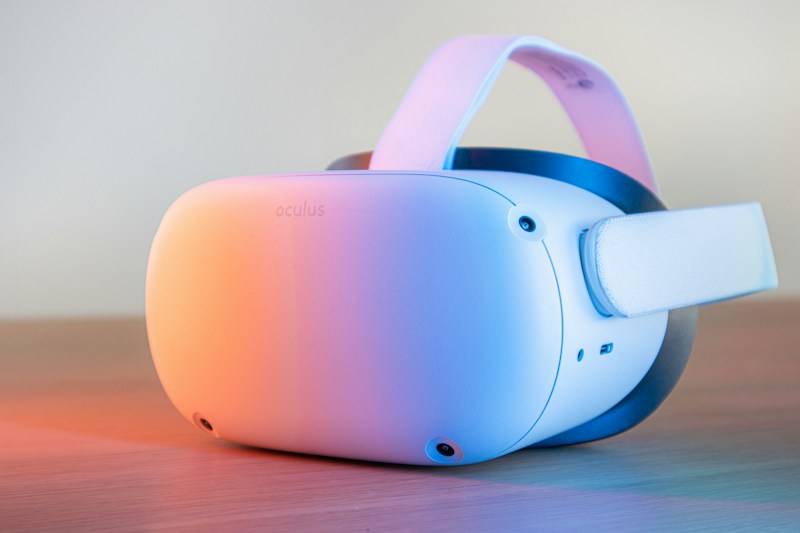
He had spent tens of billions of dollars on the metaverse — virtual reality headsets, digital worlds, avatars. It was a disaster. Meta's stock crashed. Employees were laid off. Tech journalists called it the biggest waste of money in Silicon Valley history.
Then quietly, almost nobody noticed, Mark Zuckerberg tried something different.
He made a pair of glasses.
Not fancy augmented reality glasses with holograms. Not expensive VR headsets. Just normal looking Ray-Ban sunglasses — with a camera, speakers, and an AI assistant built inside.
People laughed again. Who would pay $299 for smart glasses?
7 million people would. In just one year.
And now the entire technology world is asking a question nobody expected to be asking in 2026:
Are smartphones finished?
Who is Mark Zuckerberg?
For anyone who does not know — Mark Zuckerberg is the founder and CEO of Meta. Meta owns Facebook, Instagram, and WhatsApp — three of the most used apps in the world with a combined 3 billion users.
He started Facebook in his Harvard dorm room at age 19. Today he is one of the richest people on earth and runs one of the most powerful technology companies in history.
But despite all that success, Zuckerberg has always had one bigger dream — to build the next computing platform after the smartphone. Something that replaces the rectangle of glass in your pocket with something you wear.
For years he bet on virtual reality. It did not work out the way he hoped.
Then he bet on glasses. And this time, something is actually happening.
What Are Meta Ray-Ban Glasses?
The Ray-Ban Meta glasses look almost exactly like normal Ray-Ban sunglasses. If someone wore them on the street, you would never know they were smart glasses.
But inside these glasses is a lot of technology:
Camera — A 12 megapixel camera sits in the corner of the frame. You can take photos and record videos just by pressing a button or saying "Hey Meta, take a photo." No phone needed.
Speakers — Built into the arms of the glasses are small speakers that sit just outside your ears. You can listen to music, take calls, and hear your AI assistant — without putting anything in your ears.
AI Assistant — This is the big one. The glasses are connected to Meta AI — an AI assistant powered by the same technology as ChatGPT. You can ask it anything while looking at the world. "Hey Meta, what restaurant is that?" "Hey Meta, translate what that sign says." "Hey Meta, who is that person?" The AI sees what you see and helps you understand it.
Microphone — A built-in microphone lets you make calls and talk to the AI.
Battery — The second generation lasts up to 8 hours on a single charge. The case charges them to full in about an hour.
The Sales Numbers — From Zero to Explosion
Here is the complete sales story in simple numbers:
| Time Period | Units Sold | What Changed |
|---|---|---|
| Q4 2023 (launch) | ~1 million | First launch excitement |
| Full year 2024 | ~1 million | Slow but steady |
| Q2 2025 alone | Sales tripled | AI features added |
| Full year 2025 | 7 million 🔥 | Complete explosion |
| 2026 target | 10-20 million | Massive scaling |
Let that sink in. From 2 million total in early 2025 to 7 million sold in 2025 alone. That is more than tripling in one year.
What the Money Looks Like
EssilorLuxottica (Ray-Ban's maker)
Q3 2025 revenue → €6.9 billion
Growth          → Up 11.7% year on year
Main reason     → Ray-Ban Meta glasses

Ray-Ban Meta is now the NUMBER ONE
best selling product in 60% of
Ray-Ban stores across Europe 🏆

EssilorLuxottica's market value
hit a record high of $20 billion
Production Is Exploding
The demand has become so large that production is being urgently scaled up:
Current production   → 10 million/year target
New plan             → 20 million/year by end 2026
Why?                 → Demand is so high that the
                       new Display glasses launch
                       was delayed internationally
                       because USA demand alone
                       was "unprecedented"
When a company delays international expansion because one country is buying too fast — that is a genuine hit product.
What Changed? Why Did Sales Explode in 2025?
The glasses launched in late 2023 with modest success. But something changed in 2025 that made sales triple. What was it?
Reason 1 — Meta AI Got Dramatically Better
When the glasses first launched, the AI assistant was basic. It could answer simple questions. But by 2025, Meta AI had become genuinely powerful — similar to ChatGPT in capability.
Suddenly the glasses were not just a camera with speakers. They were an AI assistant that could see what you see, understand the world around you, and help you in real time.
You look at a menu in a foreign language and the AI translates it instantly. You look at a broken machine and it tells you how to fix it. You walk into a meeting and it quietly whispers background information about who you are meeting.
This changed everything. The glasses went from a cool gadget to a genuinely useful tool.
Reason 2 — The Price Was Right
At $299 initially and $379 for the second generation, Meta priced the glasses like a premium accessory — not like a piece of expensive technology. People spend that much on regular Ray-Ban sunglasses.
By comparison, Apple Vision Pro costs $3,499. Google Glass cost $1,500. Meta made smart glasses as affordable as a nice pair of sunglasses.
Reason 3 — They Look Normal
This sounds simple but it is huge. Nobody wants to look like a robot walking around with a giant headset on their face.
Ray-Ban Meta glasses look like regular sunglasses. You wear them to the coffee shop, to the gym, to meetings. Nobody stares at you. Nobody thinks you are strange.
This solved the biggest problem that killed Google Glass in 2013 — Google Glass made you look like a cyborg and people felt uncomfortable around you.
Reason 4 — Mark Zuckerberg Wore Them Everywhere
Zuckerberg started wearing his Meta glasses publicly — at events, in videos, during interviews. He showed people real use cases. Not demos. Not promotional videos. Just a normal person wearing glasses and asking his AI questions.
This normalised the product. If the CEO of Meta wears them every day — maybe they are actually useful.
The Smartphone Problem — Why Glasses Could Win
Here is the question everyone is now asking. Could smart glasses actually replace smartphones?
Let us think about what a smartphone actually does all day:
Taking photos          → Glasses do this ✅
Listening to music     → Glasses do this ✅
Making calls           → Glasses do this ✅
Asking questions       → Glasses do this (via AI) ✅
Navigation             → Coming soon ⚠️
Texting                → Hard without a screen ❌
Social media           → Hard without a screen ❌
Video watching         → Hard without a screen ❌
Gaming                 → Not possible ❌
For many of the things people use their phone for most often — glasses can already do them. And hands free. While you are doing other things.
Think about how many times per day you pull out your phone just to ask something, check something, or take a photo. Glasses do all of that without you ever reaching into your pocket.
The New $799 Display Version Changes Everything
Meta launched a new version of the glasses called Ray-Ban Display at $799. This version has a small screen built into the lens — you can see information overlaid on the real world.
This is true augmented reality. Navigation directions appearing in your vision. Text messages floating in front of you. Notifications without looking at your phone.
This is what smartphones cannot do. They require you to look away from the world. Smart glasses let you stay present while still being connected.
What Mark Zuckerberg Actually Believes
Zuckerberg has been very direct about where he thinks this is going.
He said publicly that people who do not have AI glasses will face "a pretty significant cognitive disadvantage" compared to people who do.
Think about what that means. He is saying that wearing AI glasses will make you smarter, more informed, and more capable than people without them — the same way having a smartphone made you more capable than people without one in 2010.
He believes glasses will be to the 2030s what smartphones were to the 2010s. The defining personal technology of a generation.
Given that 7 million people bought his glasses in 2025 — and the number is accelerating — it is getting harder to argue he is wrong.
Is This Really the End of the Smartphone?
The honest answer is — not yet. But the beginning of the end might have started.
Here is what needs to happen for glasses to truly replace smartphones:
✅ Already done:
   → Camera that matches phone quality
   → AI assistant that is genuinely useful
   → Normal looking design
   → Affordable price
   → Long enough battery life

⚠️ Still needed:
   → Better display for seeing content
   → Way to type or input text easily
   → App ecosystem like iOS/Android
   → Even longer battery life
   → Lower price for mass market
The display version at $799 is addressing the screen problem. Better input methods — voice, gestures, eye tracking — are being developed. The app ecosystem will follow the users.
The smartphone took about 10 years from the iPhone launch in 2007 to truly replace older phones globally. Smart glasses may follow a similar timeline.
The difference is — with AI, smart glasses can do things a smartphone can never do. A smartphone cannot whisper information in your ear while you are talking to someone. A smartphone cannot translate a foreign language you are looking at in real time. A smartphone cannot recognize what you are looking at and instantly tell you about it.
Simple Timeline — What Happens Next
2026 → 10-20 million glasses sold
       Prices start dropping
       More AI features added

2027-2028 → Display becomes standard
             Voice and gesture input improves
             Developers build apps for glasses

2029-2030 → Smart glasses become mainstream
             First people start leaving
             smartphones at home

2030-2035 → Glasses replace smartphones
             the way smartphones replaced
             feature phones
Final Thoughts
Mark Zuckerberg spent years being mocked for the metaverse. Then he made a pair of normal looking glasses with AI inside and sold 7 million of them in one year.
He always said the future of computing would be something you wear — not something you carry. For years that looked like a wrong bet.
It is looking less wrong every day.
The smartphone has been the most important personal technology device for 15 years. It changed how we communicate, navigate, shop, learn, and live.
But the smartphone requires you to look away from the world to interact with technology.
Smart glasses let you stay in the world while technology helps you understand it better.
That is a fundamentally different relationship with technology. And 7 million people in 2025 decided they preferred it.
The glasses are just getting started. And the smartphone's reign as the most important device in your pocket — may have a shorter future than anyone thought.
Mark Zuckerberg is laughing now. And this time — not many people are laughing back.