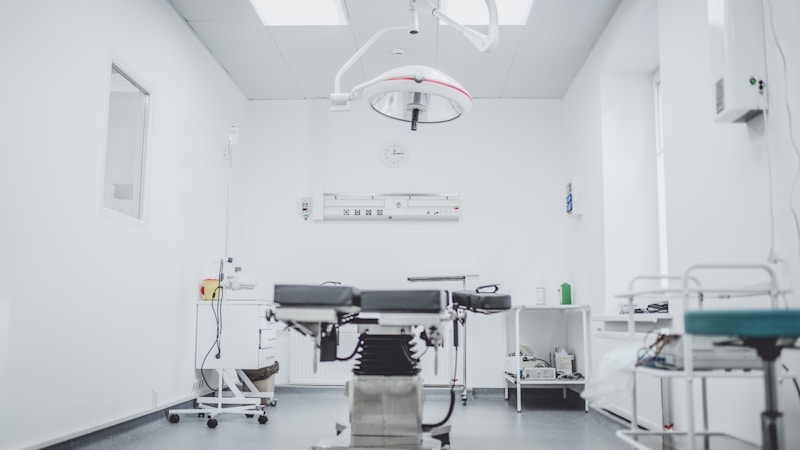
Something changed in the operating room in 2026 that would have seemed impossible twenty years ago.
A surgeon sits at a console several feet from the patient. On the screen in front of them is a magnified, high-definition view of the surgical site — three-dimensional, crystal clear, showing detail the human eye alone could never see at that resolution. Their hands move. Across the room, four robotic arms replicate those movements with sub-millimetre precision, filtering out any hand tremor, scaling large movements into tiny precise ones.
The patient on the table has four small incisions — each less than a centimetre wide. Not the large open cut that would have been required for the same procedure a decade ago.
This is surgical robotics in 2026. And it is no longer experimental. It is becoming the standard.
The Numbers That Tell the Real Story
Surgical robotics in 2026 finally looks like a market, not a monopoly. Intuitive Surgical's da Vinci was effectively unchallenged for two decades. By 2026, Medtronic, Johnson and Johnson, Stryker, CMR Surgical, and a handful of newer entrants are all in the operating room.
The global surgical robotics market reached $8.4 billion in 2026 with a compound annual growth rate of approximately 15%. It is projected to exceed $14 billion by 2030.
The global medical robotic systems market was valued at $2.26 billion in 2018 and is projected to reach $10.71 billion by 2026, exhibiting a remarkable compound annual growth rate of 21.5%.
In simple terms: surgical robotics has gone from a niche technology used in a handful of elite hospitals to a global market worth billions, growing at nearly 20% every year, with multiple competing systems now available across different price points and specialties.
The patient outcomes data is driving this. Smaller incisions mean less blood loss, lower infection risk, less pain after surgery, and faster recovery. A procedure that once required a week in hospital can now mean going home the same day.
The Da Vinci System — The Robot That Started Everything
Intuitive Surgical's da Vinci is the robot that made surgical robotics a real industry. It has been in operating rooms since 2000 and has never stopped evolving.
Intuitive Surgical remains the most dominant surgical robotics company in the world in 2026. With over 8,000 da Vinci units installed globally and more than 12 million procedures performed, it has set the benchmark for robotic-assisted surgery.
By 2025 the company had over 9,500 da Vinci systems installed globally and was approaching 15 million cumulative procedures.
The current da Vinci product family includes three main systems:
Da Vinci SP — single-port surgery through one small incision. The entire system enters through a single point, reducing scarring to almost nothing.
Da Vinci Xi — the flagship system for complex procedures involving multiple areas of the body. The most widely used in major hospitals globally.
Da Vinci 5 — the latest generation with significantly enhanced AI-assisted features, improved force sensing, and cloud connectivity for surgical performance analytics.
What Does It Cost?
Intuitive's da Vinci 5 has a price of $1.8 to $2.5 million. Older products routinely sell for hundreds of thousands of dollars to more than $1 million.
The da Vinci Xi costs $2.5 million to $3 million. Da Vinci 5 is $2.8 million to $3.5 million. Annual maintenance and service adds $150,000 to $250,000 per year.
Annual maintenance, service, and disposable instrument costs typically add $100,000 to $300,000 per year.
This is not small money. But the hospitals buying these systems are doing cost-benefit calculations that include shorter patient stays, fewer complications, and faster surgeon throughput — and the numbers work.
The New Competition — Da Vinci No Longer Alone
For twenty years, da Vinci had the surgical robotics market almost entirely to itself. That ended in 2026.
Medtronic Hugo — The Flexible Alternative
Medtronic entered surgical robotics with the Hugo RAS — a modular, mobile cart system designed as a lower-cost alternative to fixed tower platforms like da Vinci. Each robotic arm mounts on its own cart, and surgeons operate from an open 3D console. Integration with Touch Surgery Enterprise adds cloud-based video recording and performance analytics. Initially launched for urology and gynecology, Hugo is now in use across Europe, Latin America, and Asia.
Medtronic Hugo is priced at $1.5 million to $2 million — significantly less than the da Vinci Xi or 5. For hospitals that could not previously justify the da Vinci investment, Hugo is opening the door to surgical robotics.
CMR Versius — The Modular Game Changer
British-based CMR Surgical achieved unicorn status with a $3 billion valuation with the Versius system. Versius stands out for its independent modular arms, compact size fitting virtually any operating theatre, and significantly lower cost than da Vinci — estimated around $1 million to $1.5 million. By March 2024 it had completed 20,000 procedures across 20 NHS hospitals and many countries including Australia, India, Europe and Latin America.
The Versius is particularly interesting because of its pricing model. CMR Versius uses per-procedure leasing starting at approximately $1,200 per case — meaning hospitals can access surgical robotics without the massive upfront capital expenditure.
No $2 million upfront. Pay per procedure. This model could genuinely democratise surgical robotics for smaller hospitals and those in lower-income countries.
Stryker Mako — Specialised for Orthopaedics
Stryker Mako is priced at approximately $1 million to $1.5 million and is specialised for orthopaedic procedures — particularly hip and knee replacements. Mako uses CT-based 3D planning to create a personalised surgical plan before the operation, then guides the surgeon to execute it with precision that manual surgery simply cannot match.
Joint replacement is one of the most common surgical procedures globally. Mako's precision means the implant fits better, lasts longer, and requires less corrective surgery. This single application is driving enormous adoption.
How AI is Actually Changing Surgery Right Now
This is the part most coverage gets wrong. AI in surgical robotics in 2026 is not about robots making decisions independently. It is about AI augmenting human surgeons in specific, valuable ways.
Current surgical robots are surgeon-controlled tools. The surgeon operates from a console with hand and foot inputs, gaining precision benefits like tremor filtration and 10x magnification. The robot makes no independent decisions. AI-assisted features are emerging but full autonomy remains decades away due to regulatory and safety requirements.
What AI IS doing right now in surgical robotics:
Tremor filtration — The surgeon's hands naturally shake slightly. AI filtering removes this tremor before translating the movement to the robotic arms. A surgeon with Parkinson's disease could potentially still operate with precision using this technology.
Motion scaling — The surgeon makes a large movement. The robot translates it into a much smaller, more precise movement. A two-centimetre hand movement becomes a two-millimetre incision.
Surgical performance analytics — Integration with Touch Surgery Enterprise adds cloud-based video recording and performance analytics. Every procedure is recorded and analysed. Surgeons can review their own technique. Training programs can identify where residents need improvement. This is AI applied to surgical education.
AI-assisted planning — Systems like Stryker Mako use AI to analyse pre-operative CT scans and generate a personalised surgical plan tailored to the specific patient's anatomy. The surgeon reviews and approves the plan. The robot then helps execute it.
NVIDIA launched a healthcare robotics platform including Open-H, a surgical video dataset, and Cosmos-H for synthetic data generation — building the AI training foundation that will power the next generation of surgical robots.
Robotic assistants like da Vinci help surgeons in the operating room, while robotic hospital porters deliver equipment and medication down the halls.
What Happens in a Robotic Surgery — Simply Explained
Most people have no idea what actually happens during robotic surgery. Here is the simple version.
Step 1 — Patient preparation. The patient is anaesthetised and positioned. The surgical team makes three to five small incisions — typically 1 to 2 centimetres each.
Step 2 — Robot positioning. The robotic arms are positioned over the patient. Each arm holds a specialised instrument — scissors, graspers, cauterising tools, needle drivers for suturing.
Step 3 — Surgeon at the console. The lead surgeon sits at a console nearby. They see a magnified 3D view of the surgical site from the camera inserted through one of the incisions. They control the robotic arms with hand controls and foot pedals.
Step 4 — Procedure. The surgery proceeds. Every movement the surgeon makes is translated through the robot to the instruments inside the patient. AI filters tremor. AI scales movements. The precision exceeds what human hands alone can achieve.
Step 5 — Recovery. Because the incisions are tiny, recovery is dramatically faster than open surgery. Patients go home sooner, have less pain, and face lower infection risk.
The Capsule Robot — Surgery Without Incisions at All
Swallowing just one capsule for a complete gastroscopy and performing AI-assisted orthopaedic surgeries — cutting-edge innovations such as surgical robots, brain-computer interface rehab devices, and capsule endoscopes are taking centre stage at the 139th Canton Fair in Guangzhou, China.
Capsule endoscopy is one of the most remarkable developments in medical robotics in 2026. Instead of inserting a traditional endoscope — a tube passed down the throat — the patient simply swallows a capsule the size of a large vitamin pill.
Inside the capsule are miniature cameras, an LED light, and a battery. As it moves through the digestive system, it photographs everything. The images are transmitted wirelessly to a receiver worn by the patient. A doctor reviews thousands of images to check for polyps, bleeding, inflammation, or cancer.
The next evolution — already in development — is a capsule robot that can be magnetically controlled from outside the body to stop, change direction, and even deploy tiny tools to collect tissue samples.
Surgical Robots Around the World — Where Are They?
Surgical robots are concentrated in wealthy healthcare markets but expanding fast.
United States — The largest market. da Vinci is in major hospitals and increasingly in ambulatory surgical centres. As ambulatory surgical centres install da Vinci robotic surgical systems, providers boost their volume and Intuitive Surgical expands its reach.
Europe — CMR Versius is strong across NHS hospitals in the UK and European healthcare systems. The per-procedure pricing model works well for publicly-funded healthcare.
Asia — China is investing heavily in domestic surgical robot development alongside adopting international systems. Japan and South Korea have significant da Vinci adoption. India is seeing early adoption in private hospitals.
India — Apollo Hospitals launched the da Vinci Xi system, bringing robotic surgery to Indian patients for the first time at scale. The Versius per-procedure model makes this more accessible than the full purchase model.
The Future — What Comes Next
The next few years will bring three critical shifts. First, smaller and cheaper robotic systems reaching every hospital — not just large academic centres. Second, AI-driven autonomy — robots performing routine surgical tasks such as suturing and anastomosis without human intervention while the surgeon supervises. Third, 5G telesurgery — real-time remote operations that can save lives in remote areas, islands, and battlefields.
Telesurgery — a surgeon in New York operating on a patient in rural India — is no longer science fiction. 5G networks provide the low latency needed for real-time control. The first successful telesurgeries have already been demonstrated. Scaling this globally could be one of the most profound applications of robotics in human history.
Surgical Robots — Complete Price Comparison
| System | Company | Price | Speciality |
|---|---|---|---|
| Da Vinci 5 | Intuitive Surgical | $2.8M-$3.5M | General surgery |
| Da Vinci Xi | Intuitive Surgical | $2.5M-$3M | Multi-quadrant surgery |
| Medtronic Hugo | Medtronic | $1.5M-$2M | Urology, gynaecology |
| CMR Versius | CMR Surgical | $1M-$1.5M or $1,200/procedure | General, gynaecology |
| Stryker Mako | Stryker | $1M-$1.5M | Orthopaedics |
| Globus ExcelsiusGPS | Globus Medical | $1M-$1.5M | Spine surgery |
TheTechGenAI Studios — We Follow the Technology That Matters
At TheTechGenAI Studios, we track the AI and robotics breakthroughs that are reshaping industries — from surgical robots in operating rooms to AI-powered websites that reshape how businesses find customers.
We build AI-driven websites, handle digital marketing, and create digital solutions for restaurants, hotels, and businesses across India. If you want technology working for your business, we can help.
📧 [email protected] 📱 +91 98704 05692 🌐 thetechgenai.com
FAQs
What are surgical robots? Surgical robots are AI-assisted robotic systems that allow surgeons to perform minimally invasive procedures with greater precision than the human hand alone. The surgeon controls the robot from a console while robotic arms execute the movements inside the patient.
What is the most common surgical robot in 2026? The da Vinci system by Intuitive Surgical is the most widely used, with over 9,500 units installed globally and approaching 15 million procedures completed.
How much does a surgical robot cost? Prices range from $1 million for specialised systems like Stryker Mako to $3.5 million for the latest da Vinci 5. CMR Versius offers a per-procedure leasing model starting at around $1,200 per case, removing the upfront cost barrier.
Is the surgical robot making decisions on its own? No. Current surgical robots are surgeon-controlled tools. The surgeon makes every decision and controls all movements. The robot provides precision, tremor filtration, motion scaling, and 3D visualisation — but does not act independently.
What is the advantage of robotic surgery over traditional surgery? Smaller incisions, less blood loss, lower infection risk, less post-operative pain, and faster recovery. Patients typically leave hospital sooner and return to normal activity faster than with open surgery.
Where are surgical robots available? Primarily in the USA, Europe, Japan, South Korea, and increasingly in India and China. The per-procedure leasing model from CMR Versius is helping bring surgical robotics to hospitals that previously could not afford the upfront investment.